All Pranayama exercises require precise body alignment.
The most recent classes at Sonnenoase provided a vivid illustration of how, on the one hand, a relatively good and upright posture can be established in meditation, while, on the other hand, during the practice of a breathing or prāṇāyāma exercise, the form of the body that is meant to be expressed in the position is often maintained only very inadequately.
Working with the breath in a guided alignment, carefully coordinated with the different areas of the body, brings about a good discipline in one’s overall relationship with the physical. The development of various bodily and breathing exercises in the sense of prāṇāyāma is a discipline, tapas, that has a very beneficial effect on further meditative work.
Within the various approaches to cultivating the soul dimension of yoga, the free breath can be developed very well. Yet the very pleasant, gently buoyant movements of the breath that take place during the āsanas remain, in a certain sense, somewhat non-binding in relation to an indispensable discipline that requires a conscious engagement of the will.
After years of āsana practice, this is why a certain degree of comfort or habitual ease can be observed in many people who have become very well acquainted with the free breath.
Practical Aspects of Breathing Exercises
The systematic guidance of prāṇāyāma exercises in simple forms, practiced for five to ten minutes once a day, is by no means harmful for people who actively follow the path of yoga; rather, it is highly beneficial. A strong formative force develops through the various consciously chosen phases of retention, maintained with deliberate consistency.
For young people under the age of 22, prāṇāyāma exercises are not recommended, even to the limited extent suggested here. The so-called kapālabhātī exercise, as described in the book The Healing Power of Yoga Activity, is beneficial. Also suitable, as a more rhythmically regulating exercise, is the so-called nāḍī-śodhana-prāṇāyāma, which is carefully and thoroughly described in the book The Free Breath.
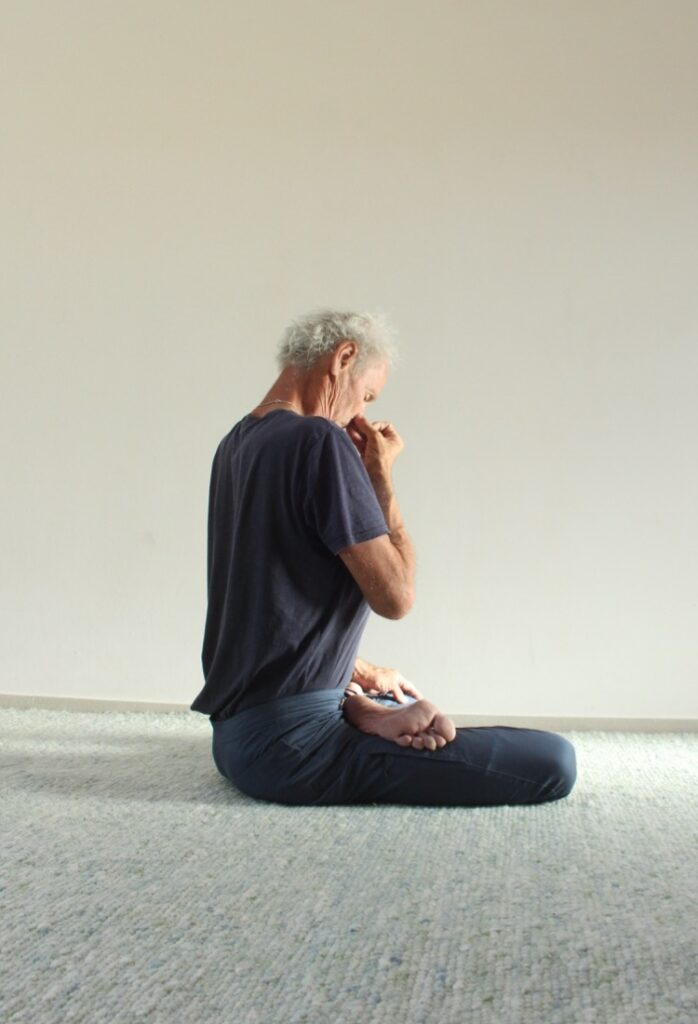
Particular attention should be paid to the posture adopted during prāṇāyāma. The lotus position is not necessarily an absolute requirement; however, if it is possible to sit in the lotus, or at least to perform the exercise in a lotus-like posture, this would be highly recommended. The following photographs and drawings illustrate how the posture required for prāṇāyāma can be cultivated and trained.
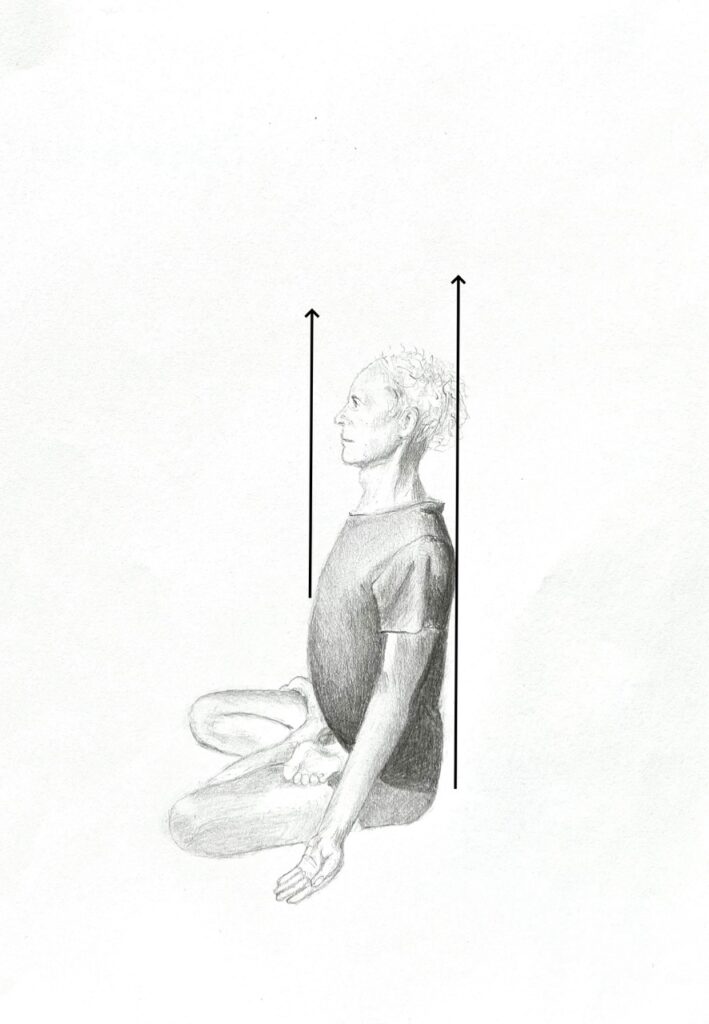
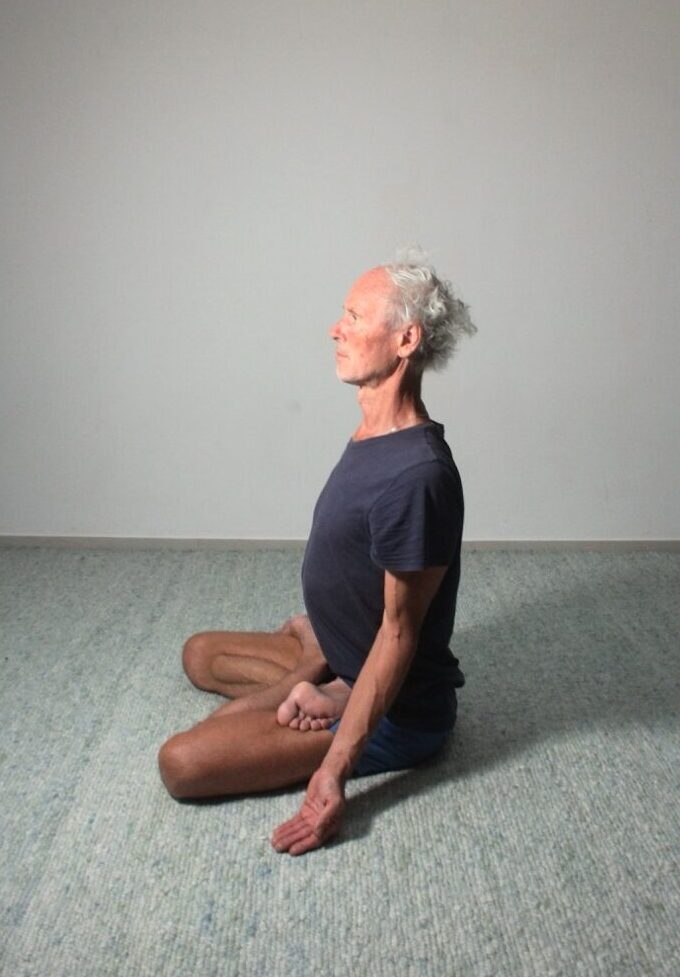
The seated posture in the lotus or a similar position should, on the one hand, be free and peripherally open, while, on the other hand, it should be strongly centered along the middle of the spine, rising upward and extending into the head.
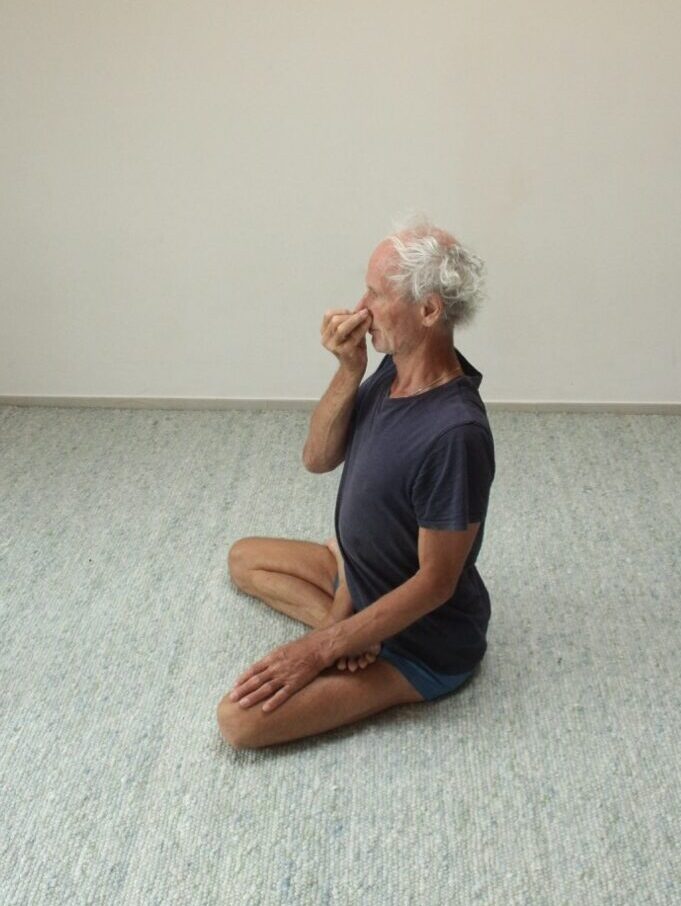
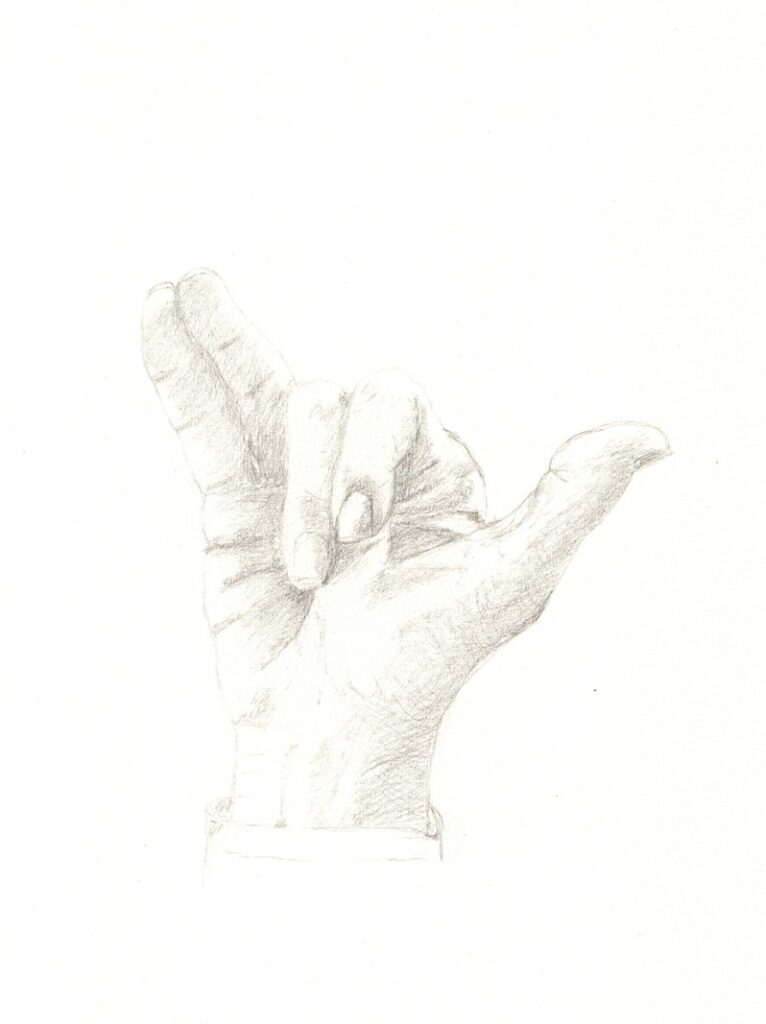
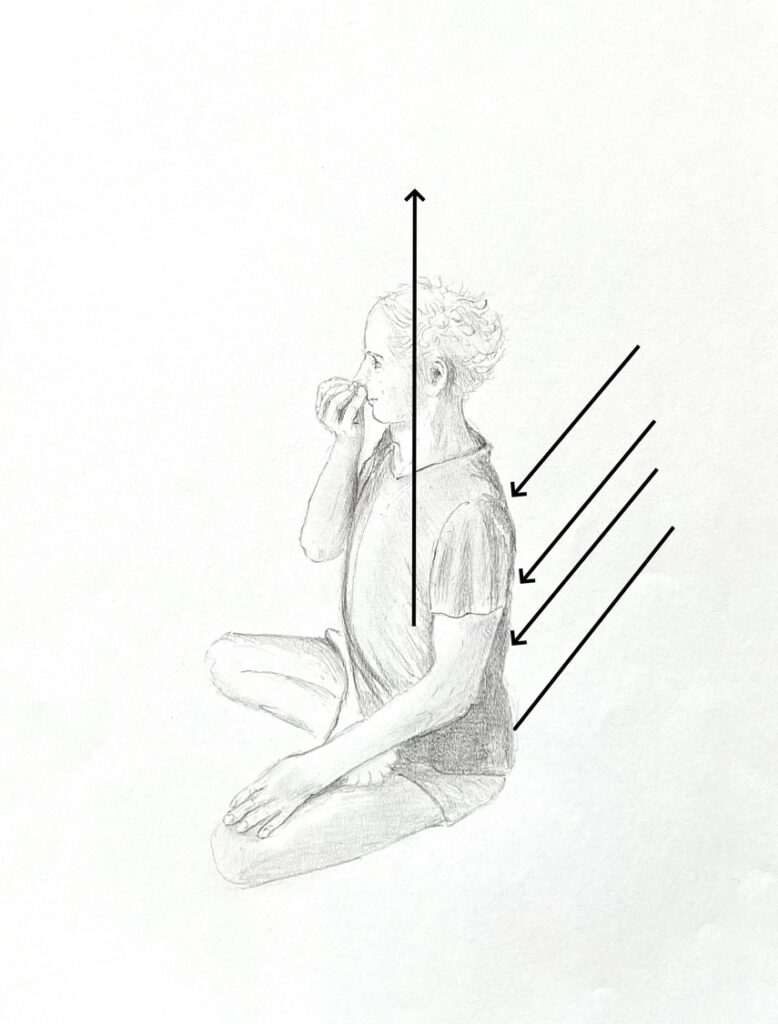
The entire posture in prāṇāyāma is very calm; the body should never appear dispersed into the periphery. The skin, however, remains relaxed at the periphery, while a gathering of the lower and middle back creates a compact and solid uprightness. In prāṇāyāma, the hand is formed into viṣṇu mudrā and brought to the nose. The lotus position provides a calm, grounded base, rooted firmly in the earth.
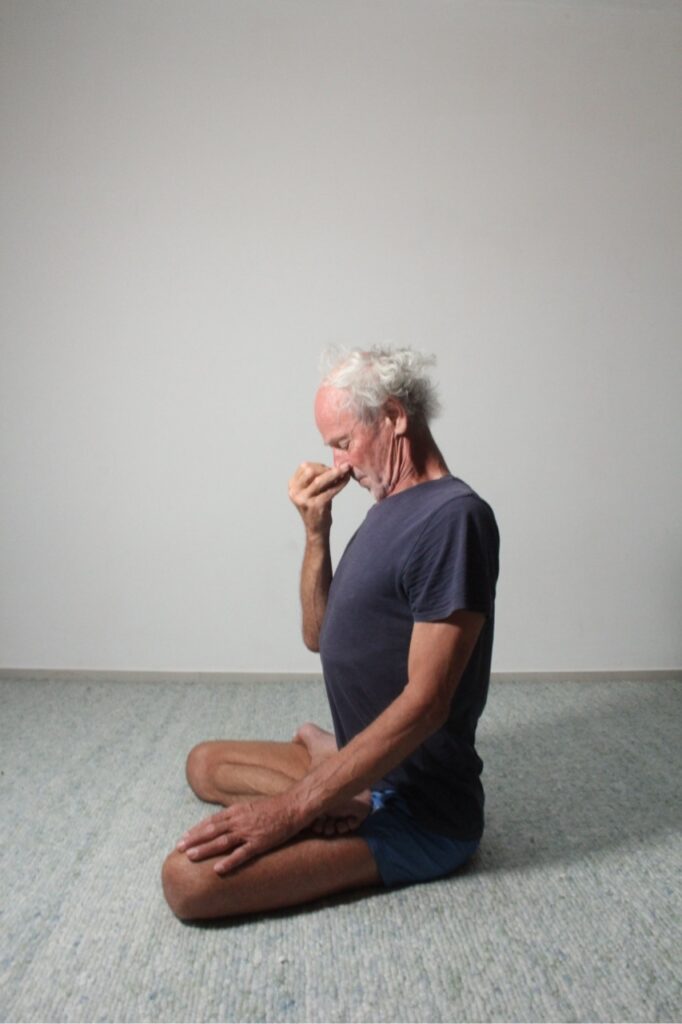
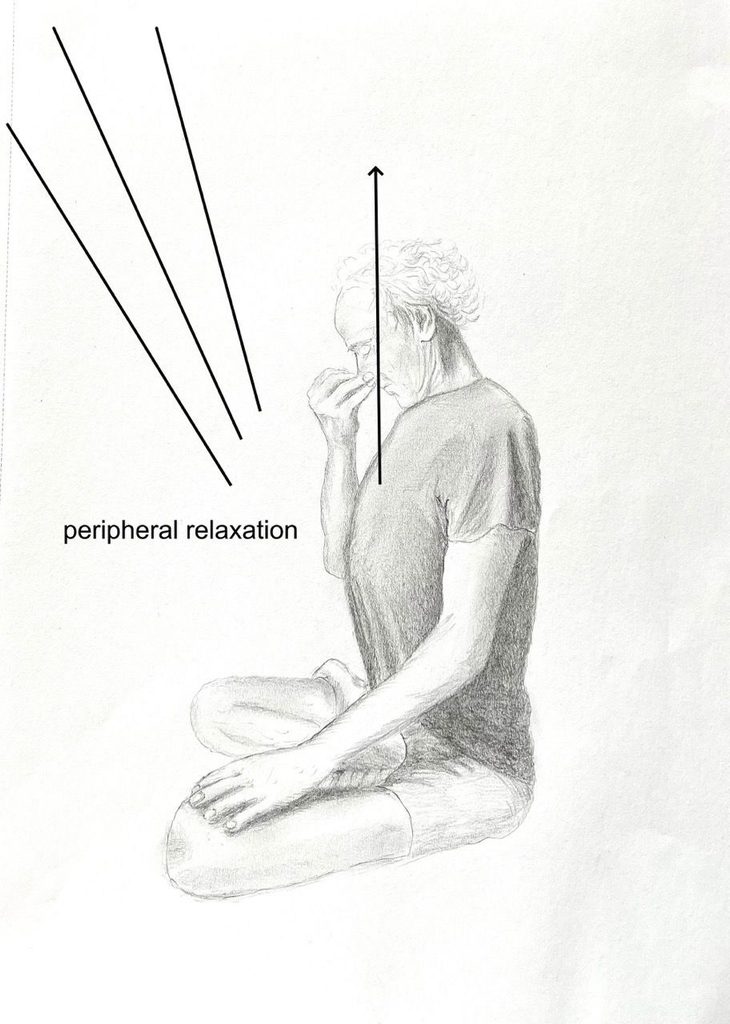
The jālandharabandha, the chin lock, is created by firmly lifting the rib cage. The shoulders, however, remain relaxed. The left arm illustrates how the body rises upward through the spine, rather than being supported by pushing or leaning on the arm.
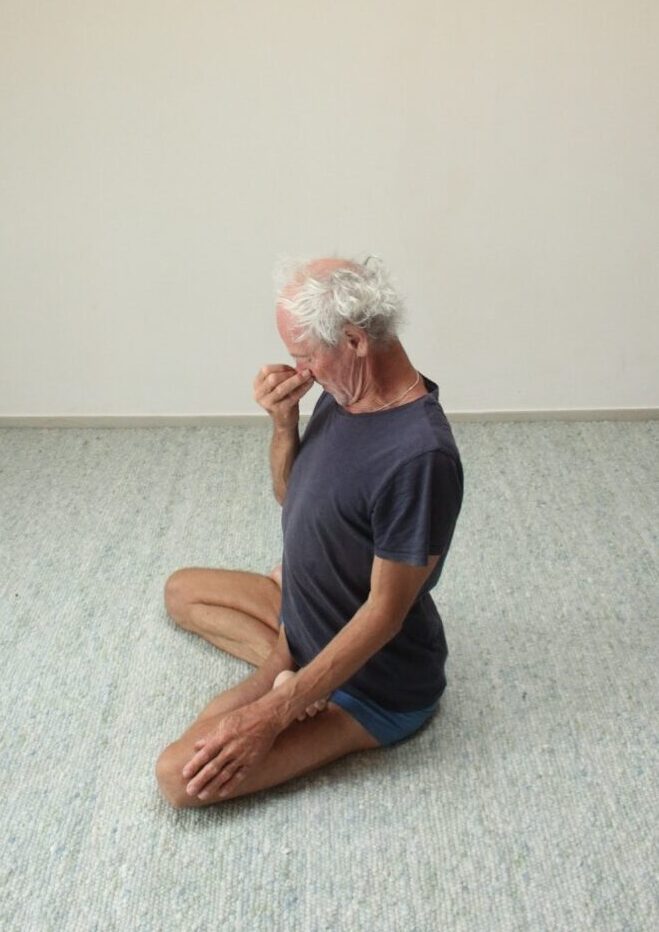
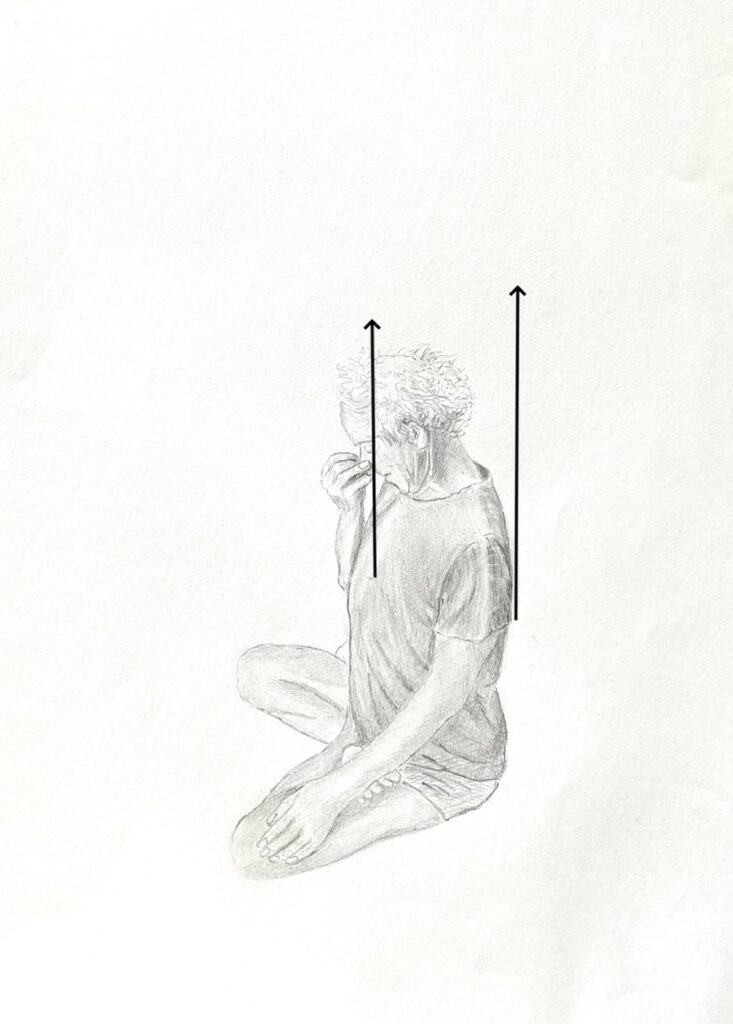
The support established through the lifted rib cage is sustained gently and continuously throughout the entire exercise.
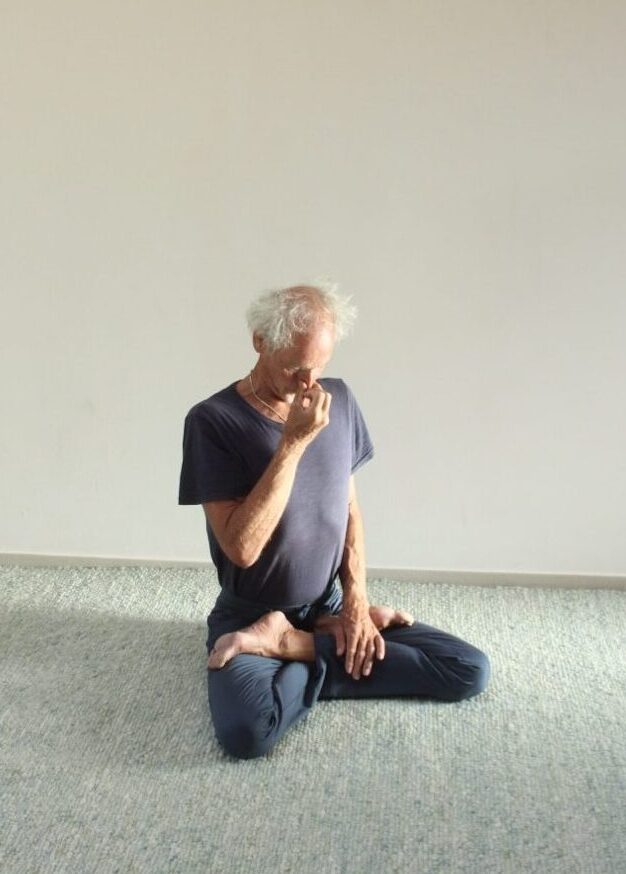
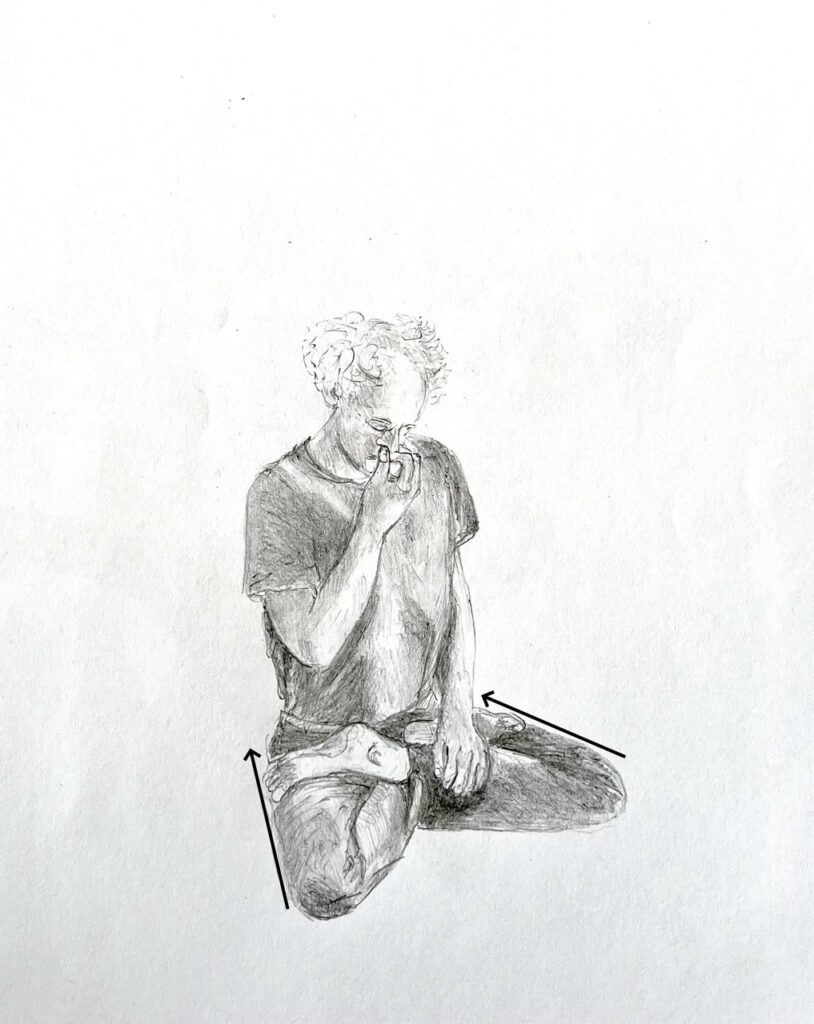
The mūla-bandha, the lock at the lowest chakra, is most easily established by drawing the knees toward the sacrum. This movement, together with the seated position, helps the practitioner center the lower body around the spine.
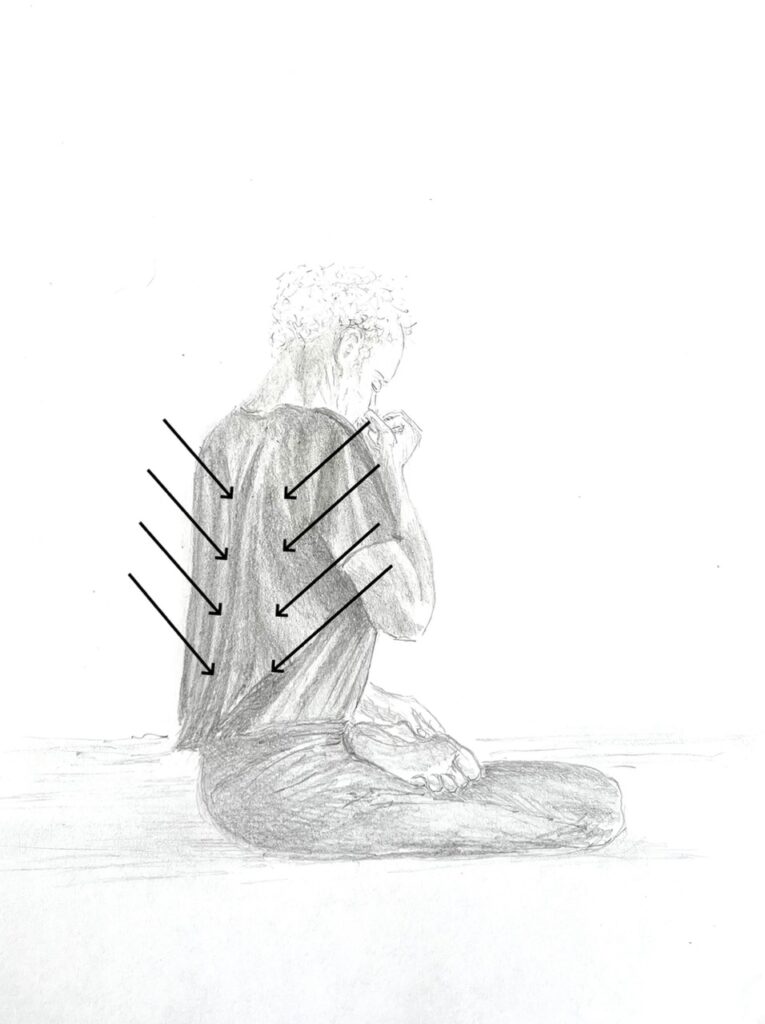
The energy currents during pranayama flow toward the spine.