What does the distribution of tension look like in Half Moon?
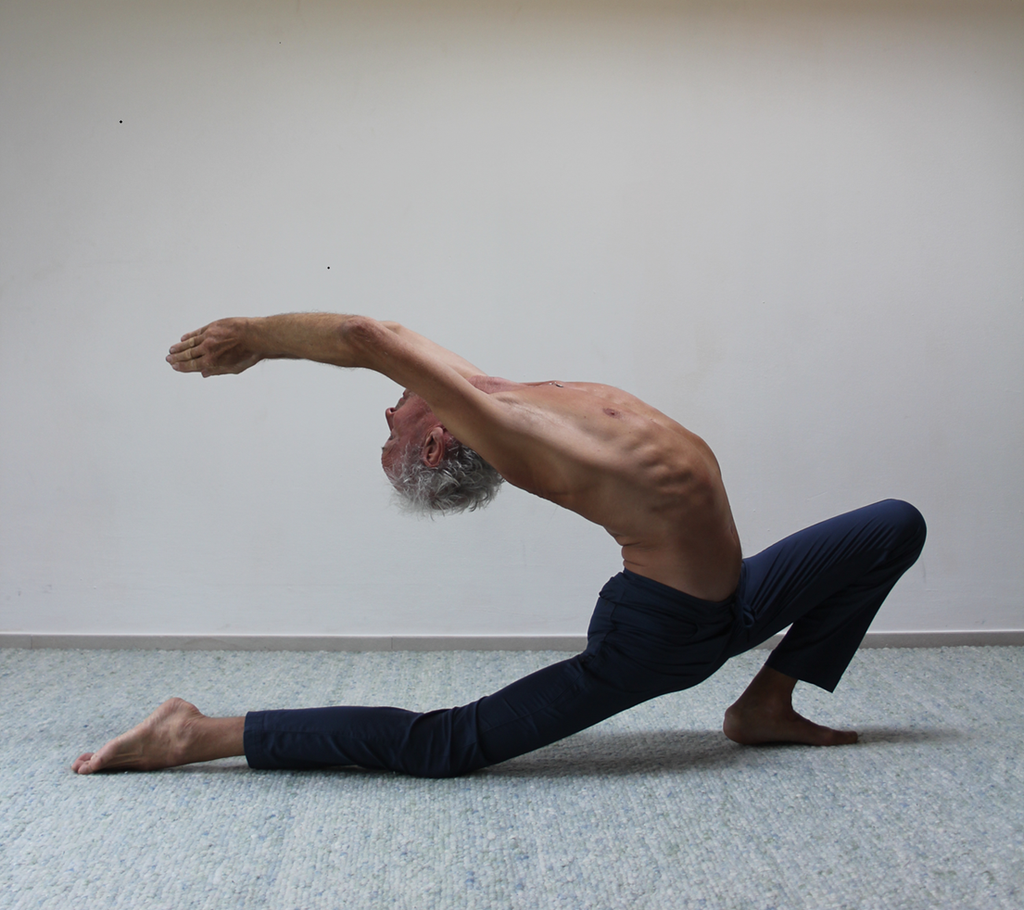
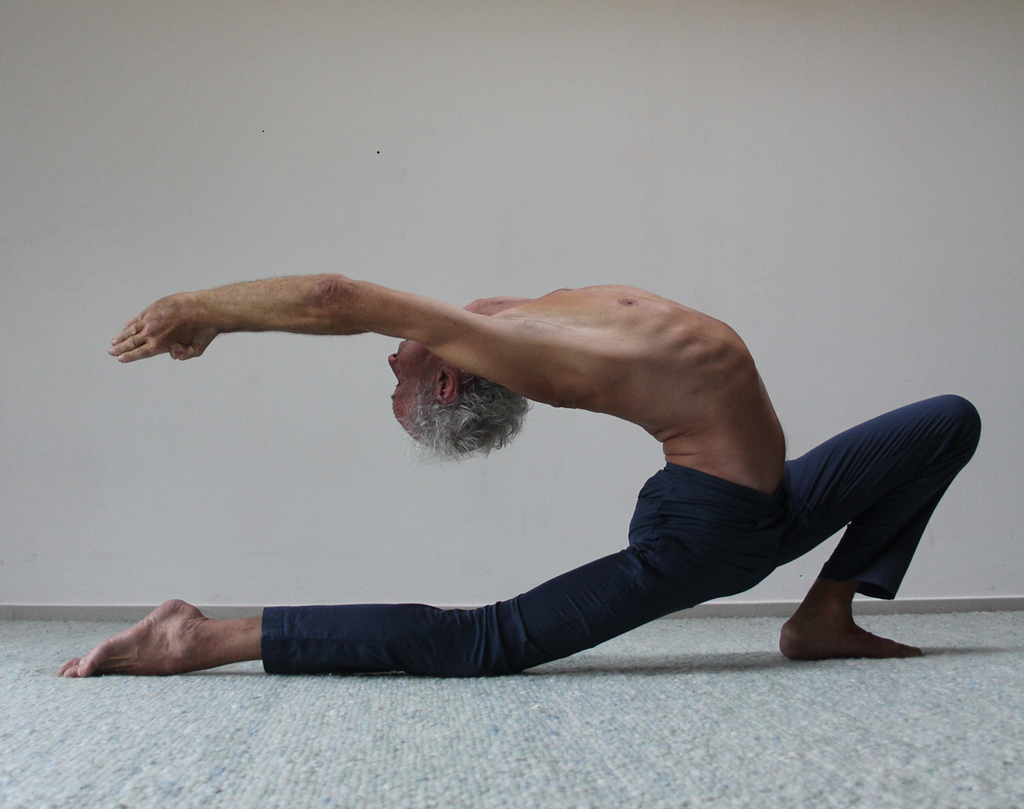
In this 9-step sequence, you can observe how Anjaneyasana develops from the simple basic variation to the advanced professional version.
What makes this video special: arrows show you exactly where intense focus and contraction are required, and in which direction the movement extends in a broad, dynamic flow.
What you can learn from this series of Asana images, among other things:
- Precise distribution of tension for greater stability in Crescent Lunge
- How to guide the legs into dynamic movement
- Clear visual examples of movements that help increase flexibility in the thoracic spine
Whether you are a beginner in yoga or looking to deepen your practice, use this step-by-step sequence as a visual alignment guide to help you make effective progress.
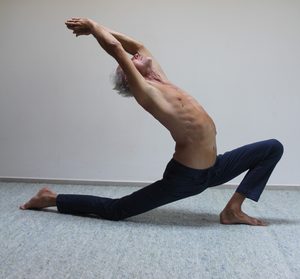
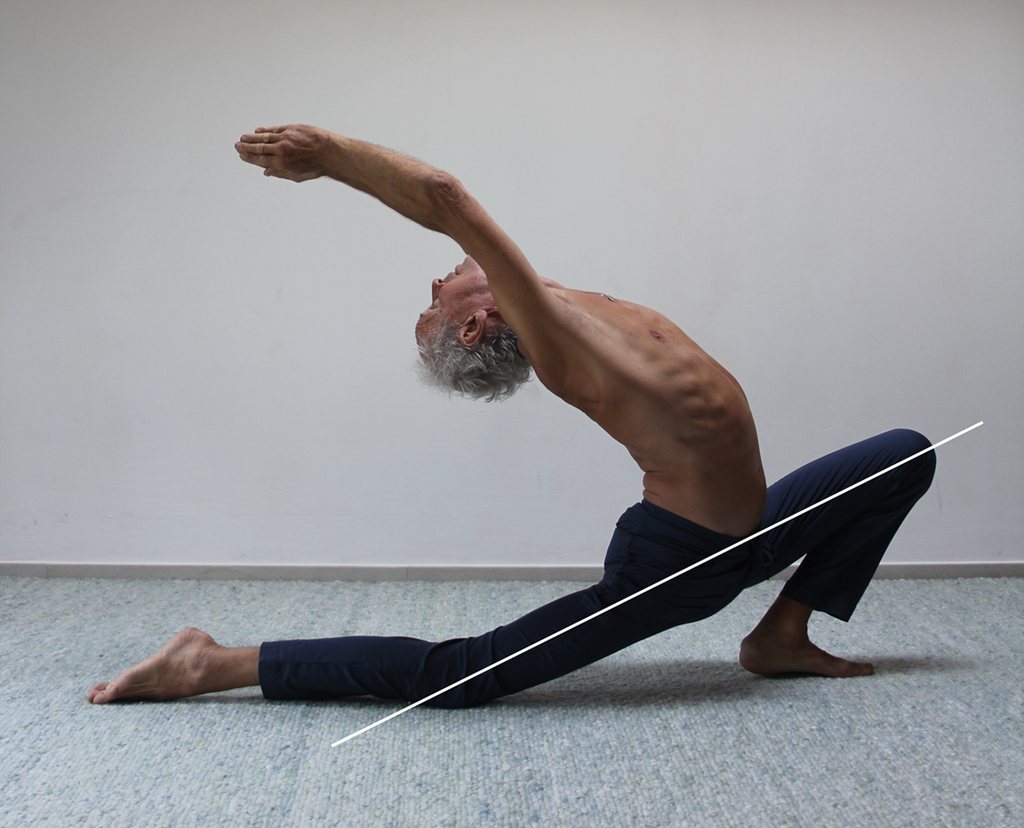
Images 1 and 2: The Foundation and Leg Dynamics
- Align the front knee directly over the ankle and make sure the back leg is in line with the front knee. Draw the back leg toward the sacrum, allowing you to sink more deeply into the wide stance. Keep the upper body—including the shoulders, neck, and head—as relaxed as possible.
- The leg dynamics can be further developed by drawing the legs inward and engaging the muscles around the sacrum, while simultaneously visualizing the direction of movement forward toward the knee and backward beyond the ankle. As you sink deeper into the stance, a precise and dynamic line forms between the knees, as shown in Image 2.
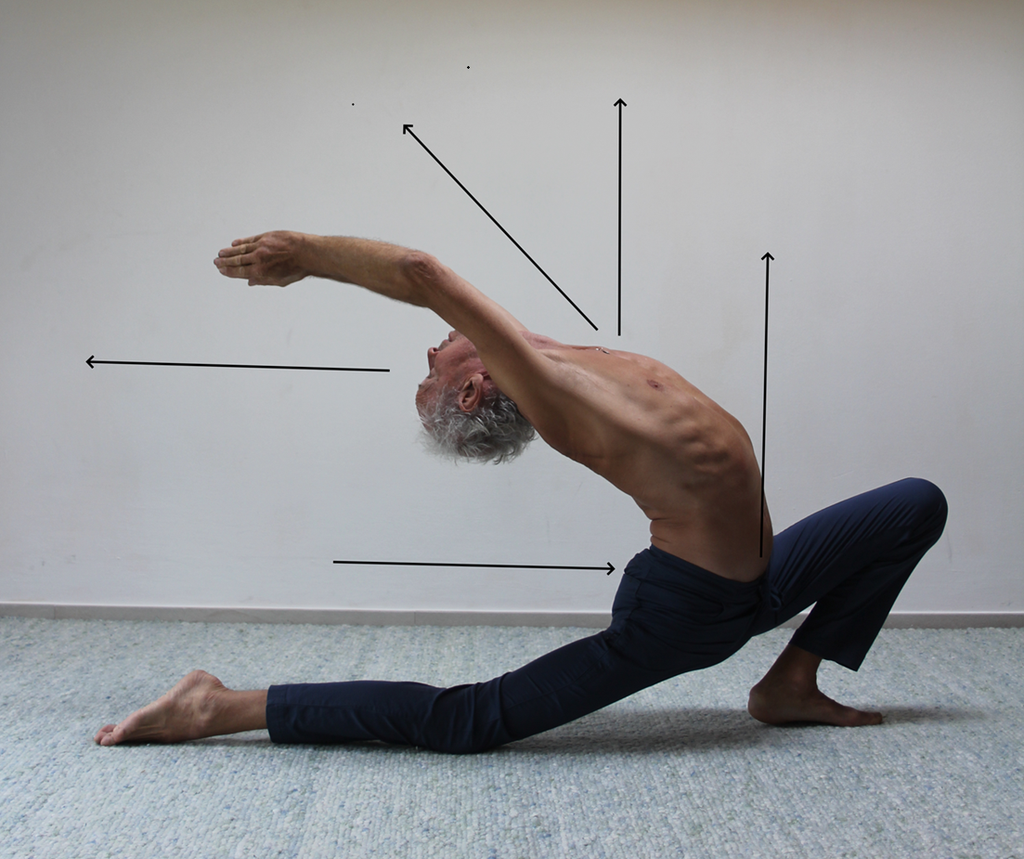
Image 3: Precise Tension Building & Centering
The arrows illustrate the interplay of the different directions: While the leg dynamics create strong centering through the sacrum, the practitioner actively lifts upward and backward from the sternum.
Images 4 and 5: Expansion and Axial Length
The contraction in the pelvic region continues to increase, allowing the strong centering in the first and second centers to facilitate further expansion through the thoracic spine.
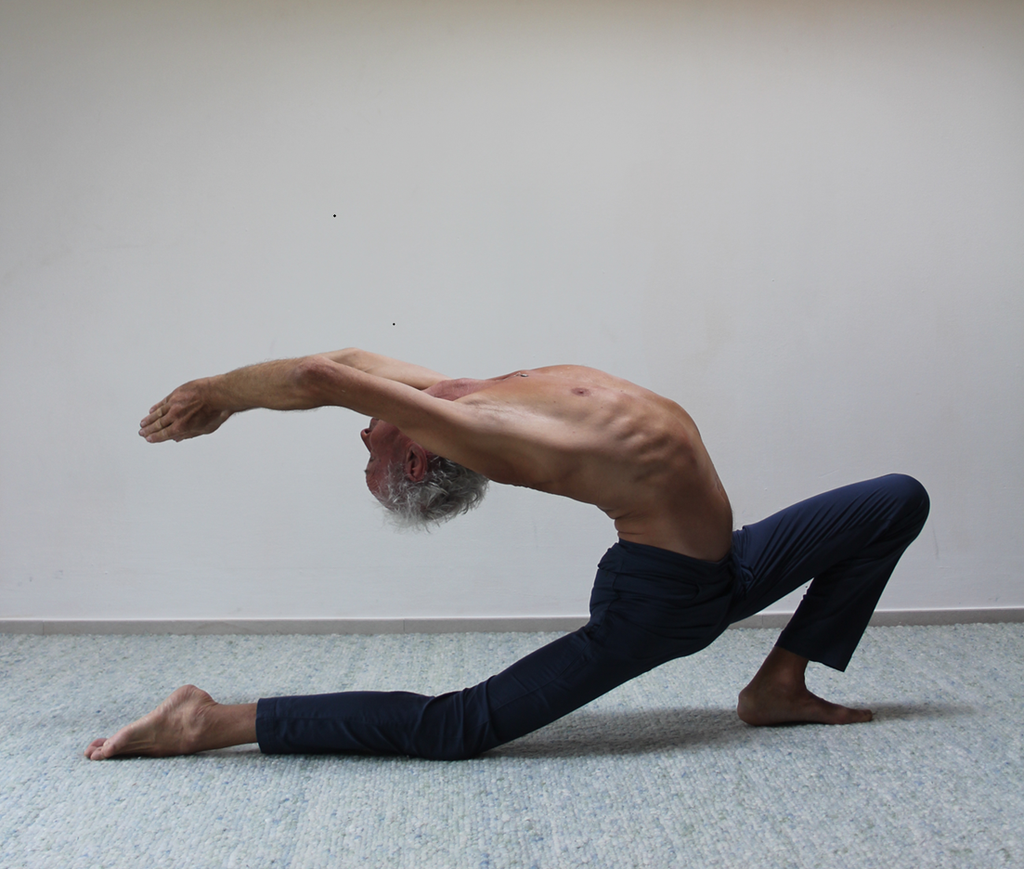
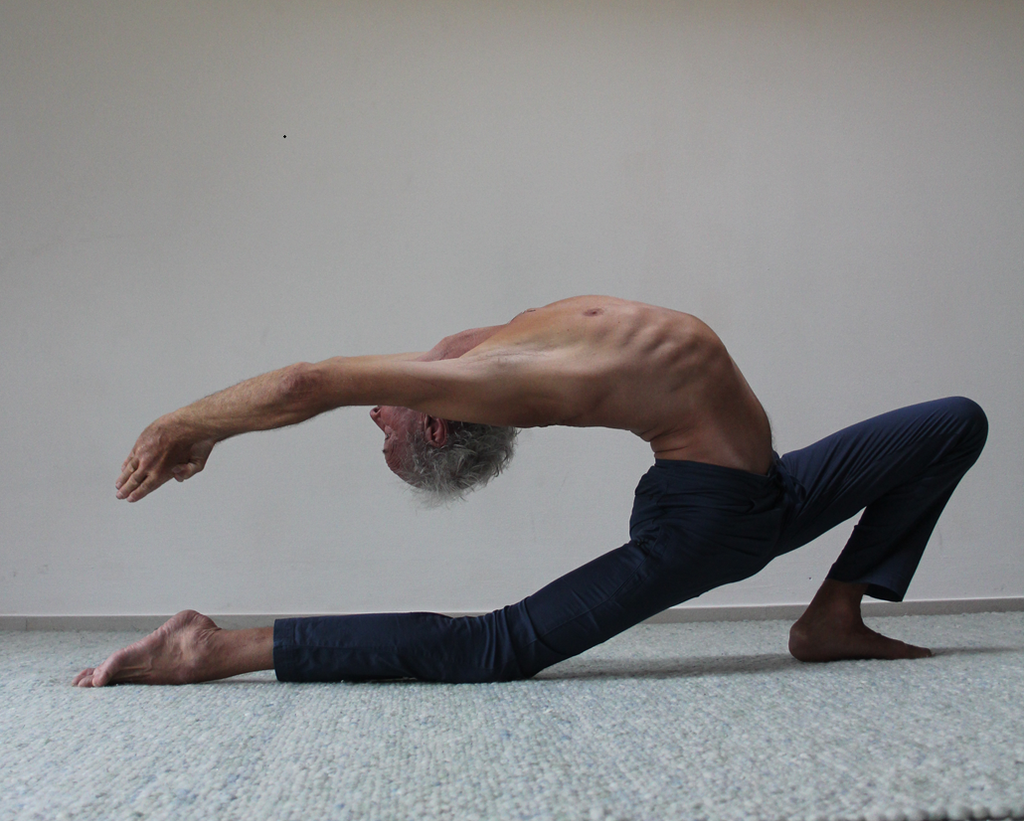
Images 6 and 7: Maximum Extension
At this advanced stage, the upper body reaches a horizontal position. The gaze follows the movement of the hands without creating tension or fixation in the neck.
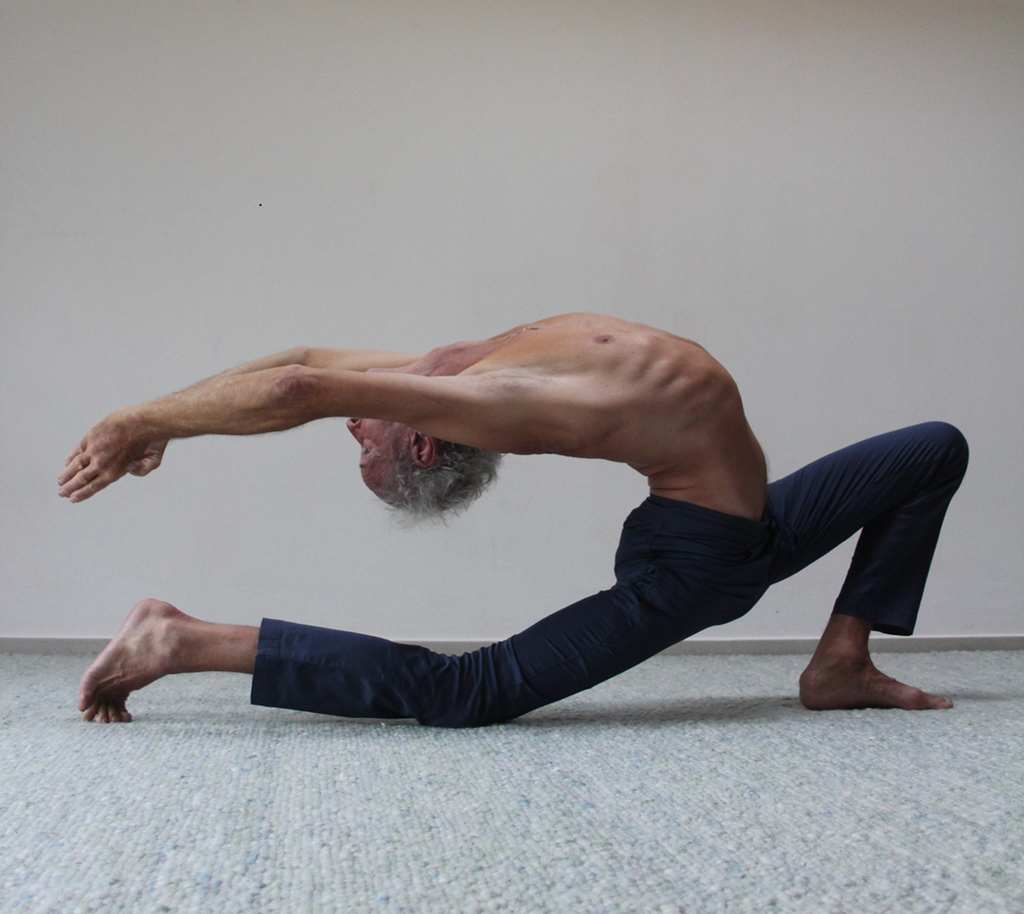
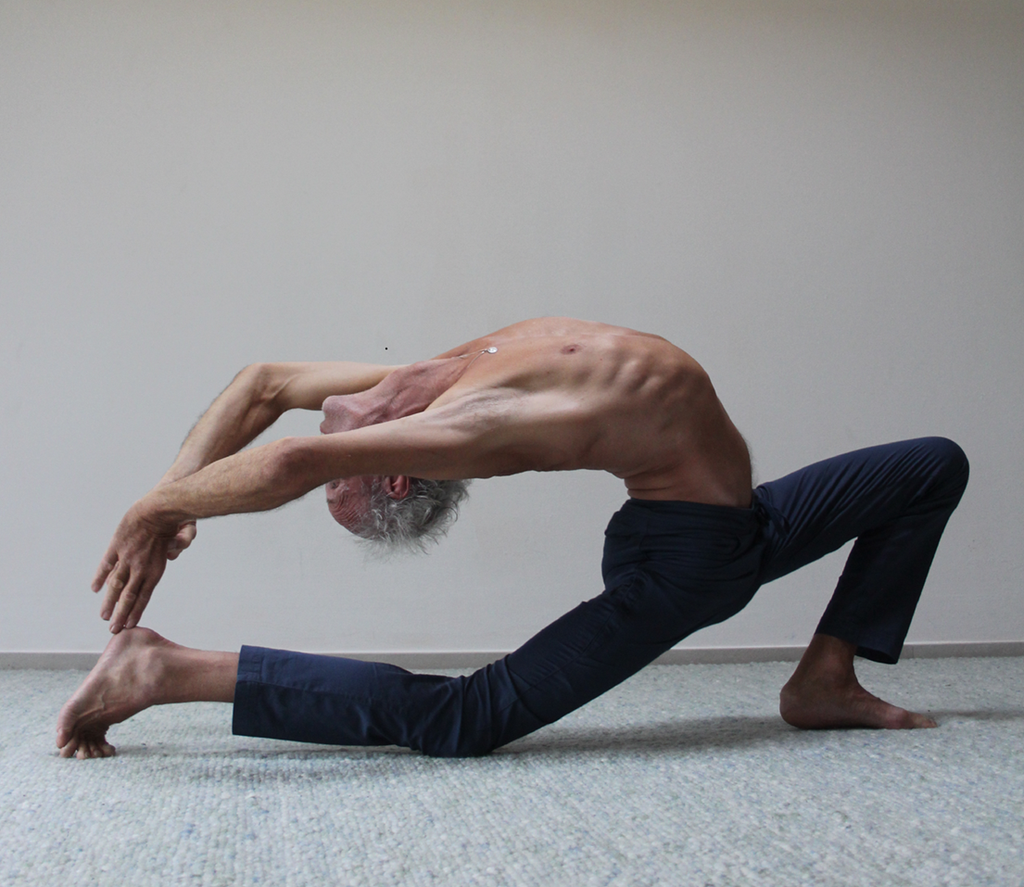
Images 8 and 9: Maximum Extension with the Foot Planted
An advanced variation for experienced practitioners: the back foot is planted and actively drawn toward the pelvis once again. The arms initially extend backward in a straight line, eventually reaching toward the back heel through renewed centering in the thoracic spine and the formation of an arch.
Conclusion
By carefully studying the images, the movement dynamics they illustrate, and practicing repeatedly, it becomes possible to shape the body through precise distribution of tension and gradually move beyond previous limitations.