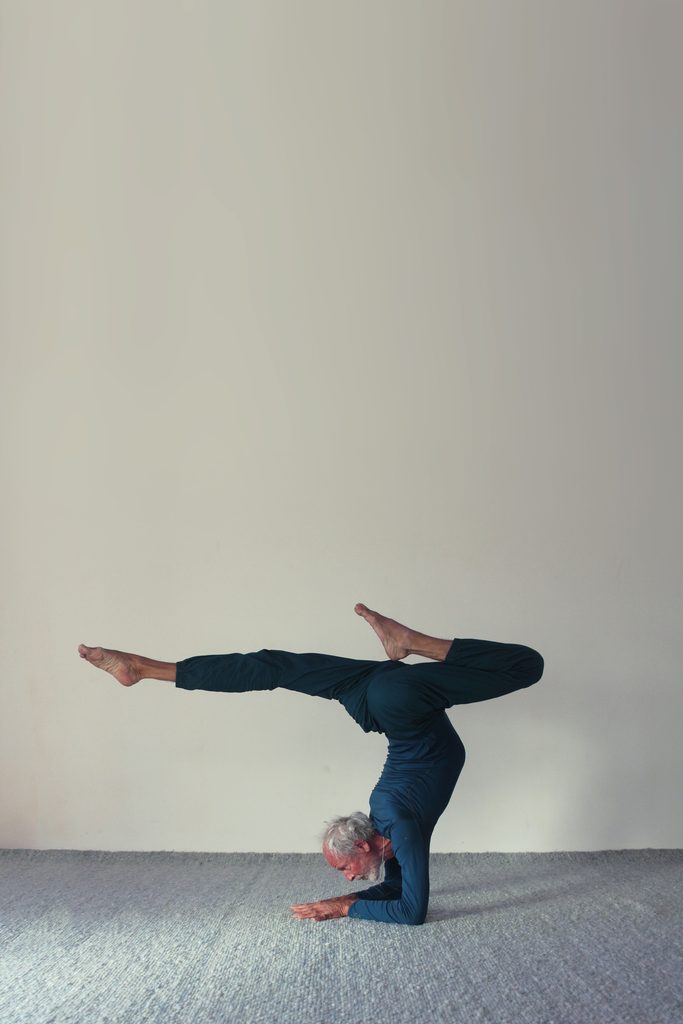
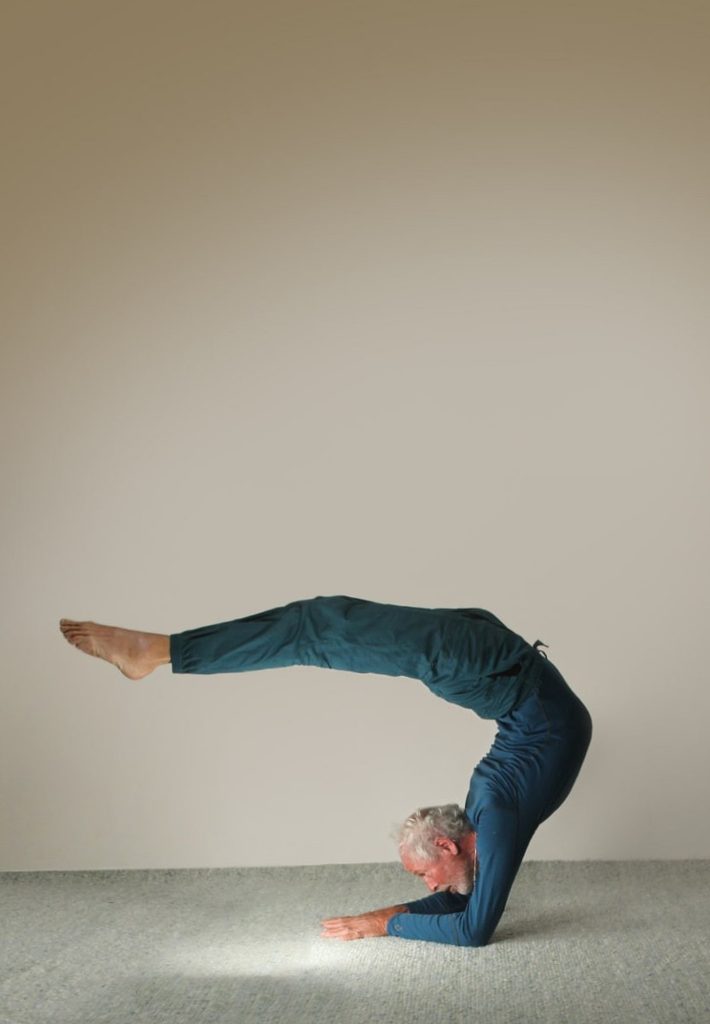
Image on the left: The Scorpion, Vṛścikāsana – a balance in a light, floating half-moon shape, inverted in space, slender and sustained from the centre of the spine.
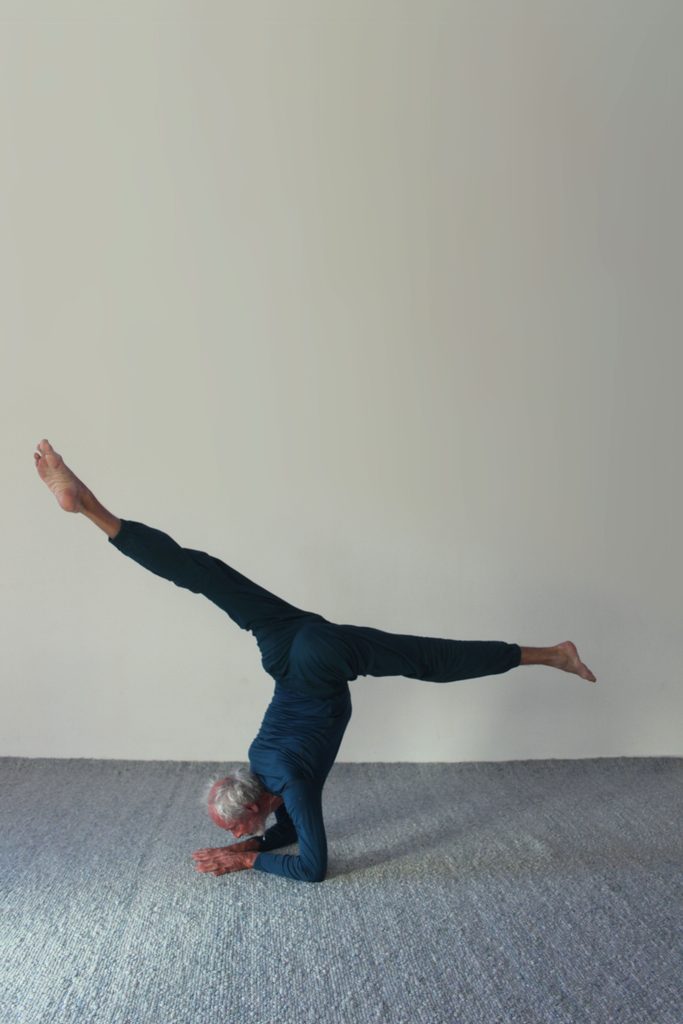
Image on the right: The body is freely shaped into a backbend from the centre of the spine.
The image evoked by Scorpion Pose bears little resemblance to the animal itself. Yet, viewed purely from the outside, the extended shape of the posture may bring to mind a scorpion with its raised, curved tail. This is presumably how the pose acquired its name.
The posture is extraordinarily light and airy, seeming to float effortlessly in space, almost as though freed from gravity. One might assume that such a pose demands a particular kind of strength. Quite the contrary: it calls for balance, dexterity and the finest adjustments in the guidance and alignment of the body.
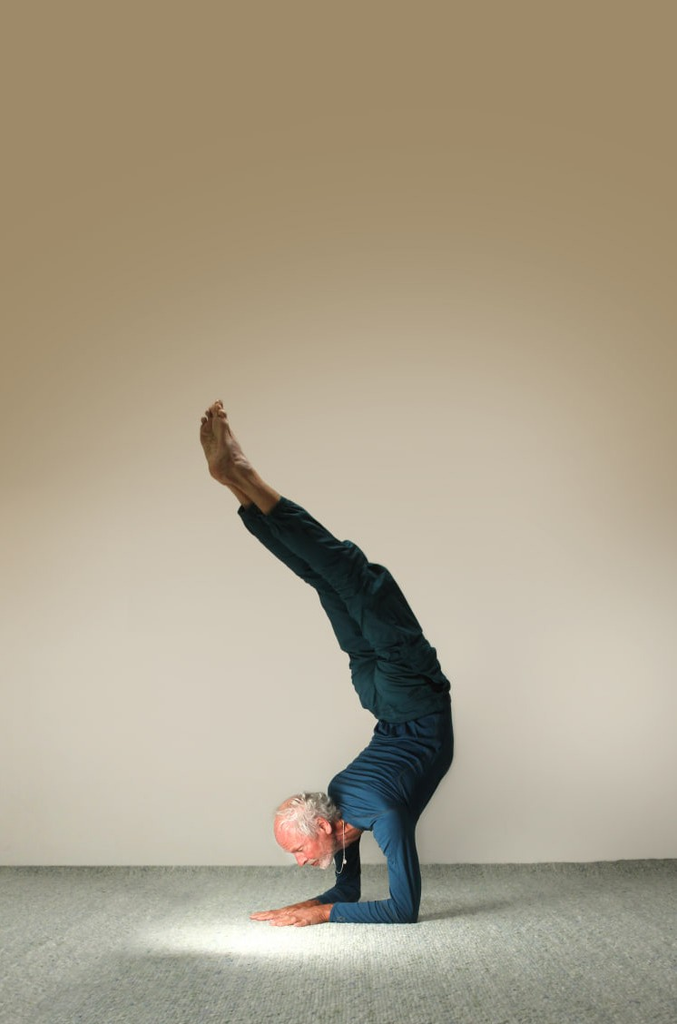
The pose reaches its fullest expression when the practitioner can gently lift the head towards the crown, while maintaining an even, stable and focused balance on the forearms.
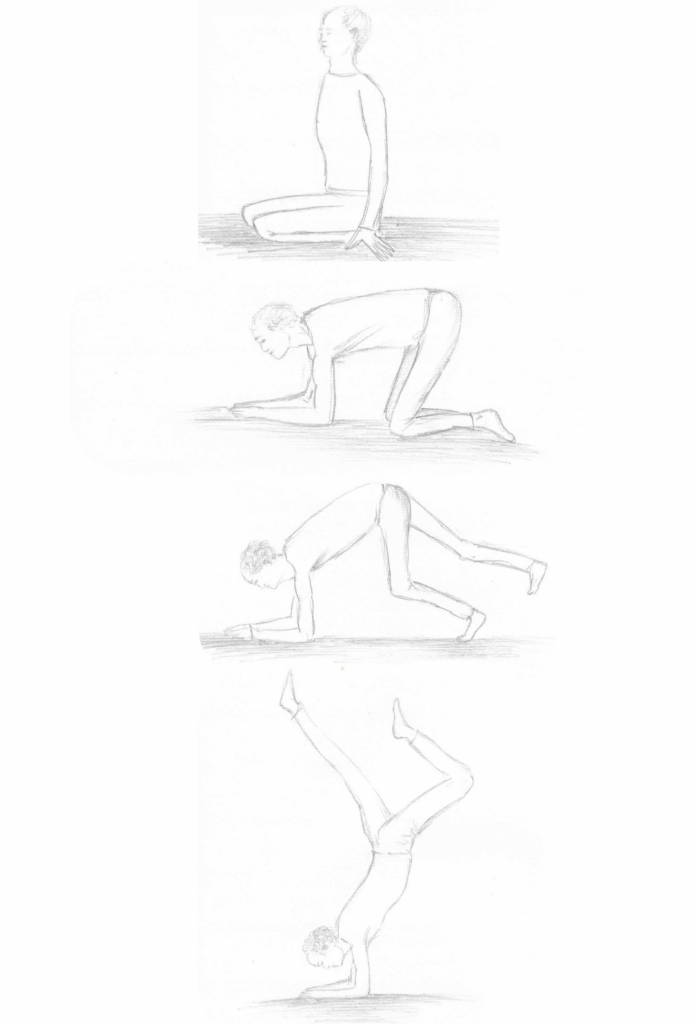
The further development of this asana, known in Sanskrit as vṛścikāsana, into a deeper backbend requires a well-balanced distribution of weight. The particular appeal of this posture lies in the freedom with which the body extends outward from the centre of the spine. Every individual movement remains conscious and must be carefully guided while maintaining balance. The movement unfolds with intensity from the back, extending into space as it transforms from a vertical orientation into a horizontal dynamic.
The chakra associated with the Scorpion is the crown centre, known as the Sahasrara Chakra. When fully developed, this centre is believed to lift the human being beyond the boundaries of the earthly realm.
Particular attention must be paid to the position of the head and the crown when performing this asana. The face should not tilt too far downwards, as though all awareness were being crushed beneath the weight of the body’s strength. The posture seeks to rise, to transcend, and to embrace the joy of an intangible, boundless space. It aspires to overcome the limitations of the earth, to find its home in the cosmos, and at the same time to release a state of complete awareness.
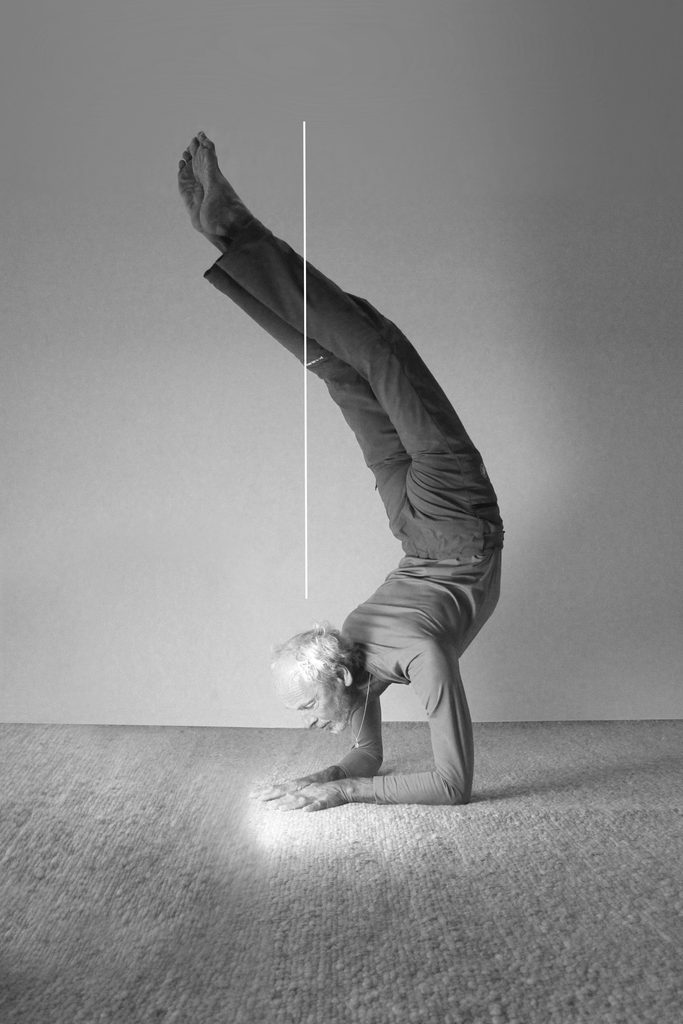
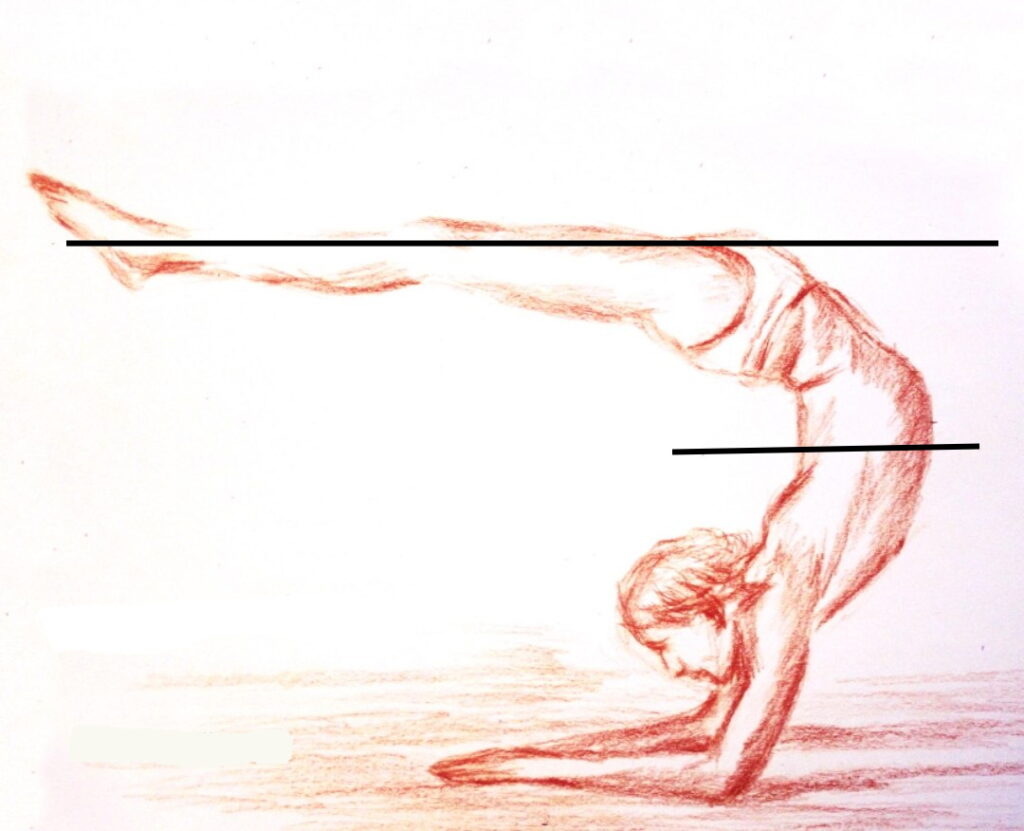
Women often find Scorpion Pose even more appealing than men, as they experience this hovering posture, suspended just above the ground, with a particular sense of delight. It is not merely a physical experience, but rather the feeling of consciously guiding the movement outwards and upwards into the vertical expanse of space. The challenge of maintaining balance is always a pleasurable one, as it awakens the natural creative impulse to explore new forms and discover new dimensions of aesthetic expression.
Image on the left: The supporting strength is centred in the middle of the spine, while the extension calls for dynamic engagement of the legs